Learn what HVAC experts say is the best temperature to keep your home cozy without wasting money

For years, homeowners have been told that setting their thermostat to 66 degrees is the best way to save on energy costs. That advice is everywhere. But as homes have become more energy-efficient and better insulated, this advice is starting to change.
Modern construction, improved insulation, and high-efficiency HVAC systems mean the most cost-effective temperature today now looks different than it did decades ago.
In this article, we’ll break down updated guidance on home temperature settings, explain how today’s homes use energy differently, and show how adjusting your approach can help save money over time without sacrificing comfort.
If you want personalized advice on saving energy in your home or you’re considering upgrading to a new HVAC system, contact the Houston HVAC experts at Richmond’s Air.
Does lowering the heat save money?
Yes. Lowering your heat can save money, but the savings come from when and how much you adjust your thermostat.
According to the U.S. Department of Energy, you can save up to 10% per year on heating and cooling costs by turning your thermostat down 7 to 10 degrees for about 8 hours a day. This works because your system uses less energy when there is a smaller difference between the indoor and outdoor temperatures.
Here is how that plays out in real life.
- In winter, setting your thermostat around 68 to 70 degrees while you are awake balances comfort and efficiency.
- Lowering the temperature further while you are sleeping or away from home can reduce energy use without affecting comfort.
- Homes in milder climates like Houston often see greater percentage savings from these adjustments than homes in very cold regions.
- The same principle applies in summer by keeping the home warmer when you are away and cooling only to a level that is comfortable when you are home.
The key takeaway is that smart temperature setbacks, not extreme settings, are what lower energy bills. Small, consistent adjustments give you the biggest long-term savings without overworking your HVAC system.
Does turning the heat on and off cost more?
It depends on how long you turn the heat completely off and where you live.
Turning the heat off for extended periods, such as when you are away for the day or longer, can reduce energy use because your system is not running at all during that time. Even though the home cools down, the energy needed to heat it back up is often less than what it would have taken to keep the heat on continuously.
However, in colder conditions, completely turning the heat off can create serious risks. In fact, the U.S. Department of Energy notes that homes in southern states can begin having frozen pipe issues when outdoor temperatures drop to around 20°F.
This matters because many southern homes were not built with plumbing lines located inside insulated or heated areas, making them more vulnerable to freezing.
The bottom line is that shutting the heat off for short periods rarely saves much and may increase the risk of damage in cold weather.
When temperatures are low, lowering the thermostat rather than turning the system off entirely is usually the safer choice. The best approach balances energy savings with protecting your home from costly repairs.
A Winter Furnace Checklist for Houston Homeowners
Get our 10-point checklist (including both do-it-yourself and professional tasks) to ensure that your home furnace is winter weather ready.
What temp should my house be?
For many years, homeowners were told that 66°F was the ideal setting for saving money. That advice was based on older homes and older HVAC systems.
We now know that in newer or well-sealed homes, keeping the thermostat too low can actually create problems. Because of this, many HVAC experts now recommend a winter heat setting of 68 to 70°F while you’re home and awake.
Here’s why: When indoor temperatures stay around 66°F, wall and ceiling surfaces can drop into the low 60s or below. If indoor humidity rises, condensation can form on those cooler surfaces. Over time, that moisture can lead to hidden mold growth, even in homes with no leaks or water damage.
HVAC professionals warn that underheating modern homes can also strain your system by causing furnaces to short cycle, especially multi-stage and variable-speed systems.
Short cycling prevents components from fully drying, which can lead to corrosion and condensation inside the system. Long-term wear from these issues can lead to higher repair costs later.
In most cases, you can still lower the temperature while you’re sleeping or when you’re away a few degrees to save energy without dropping into risky territory.
Humidifier or Dehumidifier: Which Is Best for Coughs & Sore Throats?
Learn about the benefits of humidifiers and dehumidifiers if your family suffers from frequent coughs and sore throats.
How can programmable thermostats help?
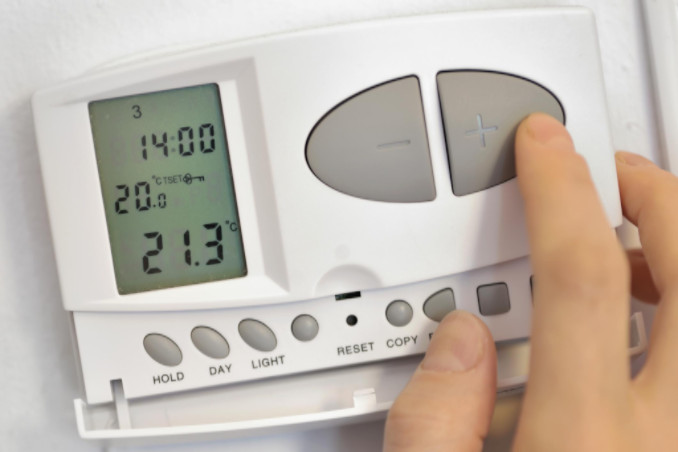
Programmable thermostats help by automating temperature changes so your home stays comfortable when you need it and saves energy when you don’t. Instead of constantly adjusting the thermostat yourself, the system follows a schedule that matches your daily routine.
Here is how they make a difference:
- They reduce wasted heating and cooling. The thermostat automatically lowers or raises the temperature when you are asleep or away, cutting energy use without sacrificing comfort.
- They support safer temperature ranges. You can avoid setting the heat too low for too long, which helps prevent frozen pipes, moisture buildup, and mold risk in modern homes.
- They improve HVAC efficiency. Gradual, scheduled changes reduce short cycling and unnecessary strain on your system.
- They create consistent savings. Small, repeated setbacks add up over time, often saving up to 10 percent annually on heating and cooling.
- They remove guesswork. Once programmed, your home stays within an efficient range without constant manual adjustments.
For homeowners trying to balance comfort, energy savings, and system longevity, programmable thermostats offer a simple way to manage temperature smarter throughout the day.
Need help finding the best home temperature for summer, winter, or fall in Houston?
Getting your thermostat settings right is only part of the equation. Your comfort, energy costs, and system performance all depend on how well your HVAC equipment is installed, maintained, and tuned for Houston’s climate. That’s where Richmond’s Air can help.
As a local, fully licensed, and insured residential Houston HVAC company, Richmond’s Air has spent more than 20 years helping homeowners across the Houston area keep their homes comfortable year-round.
Our experienced HVAC team understands how Texas heat, humidity, and seasonal swings affect modern systems—and how to adjust them for efficiency without sacrificing comfort.
Whether you need seasonal maintenance, system upgrades, or guidance on thermostat settings, Richmond’s Air offers straightforward advice, reliable workmanship, and long-term warranties you can trust.
Contact Richmond’s Air today to get expert help dialing in the right temperature for your home and keeping your HVAC system running at its best in every season.
Read reviews