 Read reviews
Sealing your ductwork is important if you want to get the most out of your residential HVAC unit. Here’s how you can accomplish this yourself.
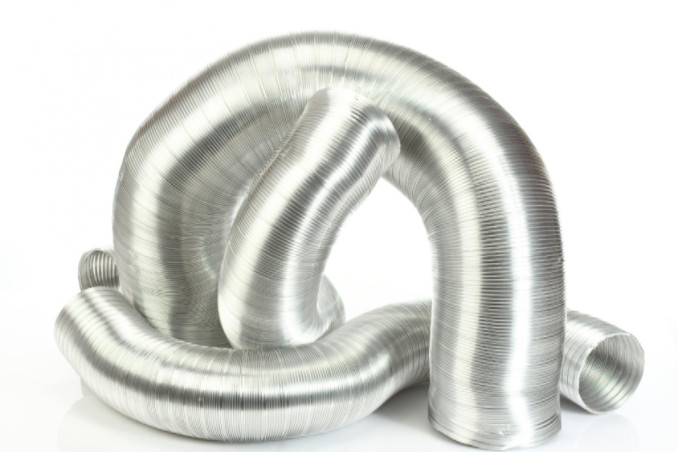
Your home ductwork acts like a tree’s root system, providing nutrients (i.e. cold or warm air) throughout the trunk, branches and leaves of your space. When these HVAC duct lines become loose, punctured, or otherwise no longer sealed, they can really lose efficacy and efficiency.
In such situations, you may find yourself continually running the heat or air conditioning system to nearly no avail.
On the bright side, it doesn’t typically require an advanced-level HVAC technician to repair this particular type of problem. This is a delight to DIY homeowners owners on a budget.
So, how does one DIY this type of issue? Listed below are some of the most common problem areas and how to easily repair them.
Duct Branch Lines
If you picture a tree, the trunk is the main portion that feeds off into smaller branches. Your heating and air system is likely set to this design scheme to some extent or another. Such branch lines can be made of a flexible duct material or a number of solid options like fiberglass or metal. These ducts branch off to serve different rooms and areas of the structure.
If there is a breach in the side of one of these lines, repair can be as easy as applying duct tape to seal the hole. If this doesn’t work, try attaching a custom-cut piece of duplicate material via screws or caulk.
A final, but much more involved option, is to replace that immediate section. In such cases, be sure to use the same size replacement duct in place of the material being replaced so as to not hinder the system’s airflow.
Duct Main Lines
Another part of the tree is the main trunk. In a duct system, the main line is rarely made of flexible ducting but rather more likely to be found composed of metal or fiberglass. Typically, these lines do not need to be repaired as they are more solidly constructed.
However, in cases of damage or other issues causing an air breach here, repair work can take several forms.
In smaller breaches of the main duct line, basic DIY applications of caulk or duct tape can provide ample resealing power. Sometimes though, the force of the air being moved or the size of the damage area will not be satisfied by these simpler repair techniques. This is when you will likely need to patch the area in question.
As discussed above, this involves cutting a patch of material that is the same as that being repaired. This material is then fastened over the breach. Caulk and/or tape at the edges of the patch should provide a good, final seal.
Boots, Registers and Line Attachments
Finally, let’s discuss boots, registers and cases of breach in hardware that attaches to your main duct system or branch lines.
For example, your bedroom likely has a supply vent blowing air into it. Inside the wall, floor or ceiling, that vent contains a piece of metal hardware called a “boot” which attaches to the duct line supplying it with air. (Filtered return lines function in the same way.)
These particular pieces of hardware, or the area where the duct attaches to them, occasionally become damaged or air-breached. The location and scale of damage here dictates how to go forward.
If the boot itself is damaged, you can try any number of techniques to repair it as replacement in this situation can become a challenging task. Caulks, epoxies and patches can all work quite well. Total or overall deterioration can sometimes be thwarted via paints and other sundries.
On the other hand, if you are experiencing a breach where your duct line actually connects to the boot, you are often best served by removing and reattaching the connection. If zip-ties hold a flex-line to the boot, try detaching and reattaching with new zip-ties. If the boot is cut directly into the side of metal or fiberglass, solid-surface ducting, you can try the same remove-reinstall tactic.
In these cases, screws and foldable tabs may be the utilized configuration or even your problem’s actual culprit. Again, as primitive as it may sound, sealants such as caulk and duct tape are actually professional tools of the trade that are quite effective in such situations.
The Importance of Maintaining HVAC Ductwork
Your home’s ducts are necessary in its ultimate fight toward successful and efficient, indoor temperature control. By maintaining these lines, you will ensure your structure and its inhabitants benefit from the very best results in HVAC ductwork. For today’s unabashed DIYer, these are the basics of duct sealing and breach remediation techniques for most modern systems.
Keep reading: