Richmonds Air Houston

License TACLA32064E

Professional AC and Heating Services

Houston's BEST Heating & AC Repair since 2002
5 star ratings Houston AC Repair company Read reviews

Request Service
(713) 732-6426
M-F 7am - 7pm | Sat 7am - 5pm
  • Home
  • About Us
  • Service Areas
    • Houston
    • Bellaire
    • Katy
    • View All
  • Services
    • Air Conditioning
      • AC Installation
      • Whole House Humidifier Installation
    • Heating
      • Heating Repair
  • Learn
  • Blog
  • Reviews
  • Contact Us
Mention these WEB COUPONS when contacting
us to get discount. One offer per customer.
scissors $25 off any repair $100 off new equipment FREE service call with repair

Welcome to Richmond's Air AC repair blog! Here you'll find a wide range of helpful articles covering everything from AC parts and common system failures to practical DIY tips homeowners can use between service calls.

Our goal is to help you better understand how your heating and cooling system works, why certain problems happen, and what AC repair solutions might make the most sense for your budget.

As a local Houston HVAC company, we regularly publish new blogs that address real issues we see in the field, including thermostat concerns, refrigerant leaks, energy savings, and unexpected breakdowns in the middle of a Texas heatwave.

If you still have questions or you're ready to schedule an appointment for HVAC repair in Fort Bend or Harris County, Richmond's Air is here to help. With decades of experience in AC and heating repair, maintenance, and system installation, our team is prepared to keep your home comfortable year-round.
Houston HVAC (Home) / Blog / AC Repair: Tips & Tricks

HVAC Parts 101: Air Compressor

October 16, 2017 by Richmond’s Air

how your hvac compressor works

Thankfully, cooler weather appears to be on the horizon. However, for those last remaining warmer days, nothing is more welcome than a cool home on a hot afternoon.

As you may have read in earlier installments of our HVAC 101 series, your air conditioner functions primarily by transforming refrigerant from a liquid to a gas.

To accomplish this feat, the compressor component is absolutely essential.

What is an air compressor?

The compressor’s job is to raise the temperature of the refrigerant. This is done by squeezing and increasing the pressure put on the refrigerant.

Once the temperature is raised to a certain point above the temperature of its surroundings, the refrigerant, in its liquid state, moves throughout the system.

Once the refrigerant is heated, it begins to move throughout the condenser coils on the outside unit. This causes the heat absorbed by the refrigerant to be released into the outdoors.

This then cools the air inside your home.

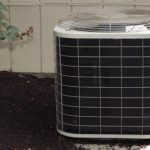
Air conditioning unit: Richmond’s Air AC Repair blog

7 signs your AC unit is low on refrigerant

Is your air conditioner blowing lukewarm air despite being set on high cool? Feeling the struggle to keep your home comfortable? It might be a sign of low refrigerant.

Learn more

Potential AC compressor problems

The compressor is often called the heart of the air conditioning unit – and with good reason. Without the component that initiates the heating of the refrigerant, the entire air conditioning cycle would not be able to continue.

For this reason, if you’re facing an AC compressor problem, things can break down very fast.

Firstly, if your compressor isn’t working period, several factors could be the cause. The most common is a lack of electricity to the unit. However, the issue could stem from elsewhere.

If you notice the following issues with your AC, your compressor might be to blame:

  • Air discharge that is either too low or too high
  • Unit is not cooling as it should
  • AC unit stutters when starting

If you’re unsure of the issues plaguing your system, contact a professional HVAC technician.

At Richmond’s Air, we offer both the air conditioning installation and maintenance services you need to keep your home as comfortable as possible. Contact us today to learn more or schedule an appointment.

Filed Under: AC Repair Tagged With: air conditioning systems, central air conditioning units, preventative maintenance

HVAC Parts 101: Thermostat

September 18, 2017 by Richmond’s Air

Digital thermostat

More than likely, your home has a thermostat – you know, the mechanism you use to adjust your home’s temperature to a comfortable level. The job of a thermostat is to set your preferred temperature for as long as you like.

Let’s talk briefly about how your thermostat works, common problems you may experience, and how you can keep your thermostat working smoothly.

How Your Thermostat Works

Your thermostat’s purpose is to maintain a constant temperature throughout your home. You set your thermostat to the desired temperature, and the thermostat uses both heat and air conditioner to reach that level.

Most thermostats have either a sensor or a strip of mercury to judge the temperature of a room. From there, the thermostat acts like a light switch to turn on the current to either the heater or air conditioner.

Many modern thermostats are built with “smart” technology, meaning they are capable of learning the heating and cooling patterns in your home, as well as how long it takes your home to reach a desired temperature, and automating this process to maximize comfort and efficiency. Smart thermostats are a great option for homeowners looking to upgrade their heating and cooling system and lower their monthly energy bill.

Problems With Your Thermostat

There are a number of ways your thermostat can malfunction. Most common problems include:

  1. No thermostat display – If your thermostat is not showing a display, it could be a sign of a dead battery or a tripped breaker. If you’re sure power is flowing, take off the thermostat cover and check for dirt buildup, loose wiring or loose screws.
  2. Temperature is not changing to setting – If your thermostat never allows the room to reach your set temperature, first check for dirt or a stuck heat anticipator. This is the part that signals the heater to turn on. If neither of these is the culprit, a thermostat in direct sunlight at any point will likely have a skewed reading.
  3. Running constantly – If your heater or air conditioner never stops running, it could be that your thermostat anticipator is not working properly, or that there is simply a buildup of dirt somewhere.

Maintaining Your Thermostat

One of the first things you should do regularly to maintain your thermostat’s working condition is clean it and making sure power is flowing to the system. Dirt buildup is a common cause of numerous problems.

Secondly, make sure that your thermostat is placed in a central location and away from any direct sunlight. These conditions can skew a thermostat reading and make your system’s efficiency go way down – not to mention make your home unbearable.

If you’re still experiencing trouble with your thermostat, a professional HVAC technician can help you nail down the problem. Serving the greater Houston area, Richmond’s Air offers both repair and maintenance services to keep your air conditioner and all of its parts running smoothly. Contact us today to schedule an appointment.

Filed Under: AC Repair Tagged With: air conditioning systems, smart thermostats, thermostats

HVAC Parts 101: Air Filter

September 11, 2017 by Richmond’s Air

If you live in a home or apartment with a central air conditioning system, or even just drive a car, you’ve probably had to change an air filter at some point. Air filters help trap dust and other allergens from being circulated back into your home’s breathable air.

Let’s take a look at how air filters function and how you can keep your air filter doing its job for as long as possible.

How an Air Filter Works

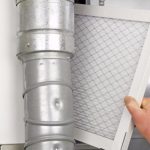
Air filters, though simple, actually do quite a lot. They’re usually made from spun fiberglass set between a cardboard frame. Filters helps keep your air cleaner by filtering the dirty air that is sucked through it by the HVAC unit.

The fiberglass or other material traps particles and allergens that can make their way into your home. These particles can include:

  • Dust
  • Pollen
  • Animal fur
  • Mold spores
  • Bacteria

When spring cleaning your AC, don’t forget your air filter—it needs to be changed because it’s constantly trapping dust and particles while your system is running.

Maintaining Your Filter

A dirty air filter will not only allow allergens and other particles to stay in your home’s air, but it can also restrict the free air flow from your HVAC unit. This can significantly cut down on your unit’s efficiency and raise energy bills.

Luckily, maintaining your air filter is as easy as cleaning or replacing it. An HVAC air filter should be checked every month and either cleaned or changed. A good rule of thumb is to hold the filter up to the light. If you cannot see light passing through the filter, it’s time for a new one.

Common Air Filter Problems

There are a number of problems that can stem from a clogged air filter. If you notice frozen evaporator coils or your unit isn’t cooling as well as it should, it could all be caused by a dirty filter that just needs to be changed.

Understanding your HVAC equipment can help you identify potential problems in their early stages, saving you time and money later on. Contact the Spring AC repair specialists at Richmond’s Air today if you need to speak to a professional technician.

Filed Under: AC Repair Tagged With: air filters, DIY maintenance, preventative maintenance

HVAC Parts 101: Expansion Valve

August 24, 2017 by Richmond’s Air

The central air conditioning system is a great example of modern engineering, and there’s nothing better on a hot summer day than a cool home.

However, there’s more to your air conditioner than meets the eye. Small parts work together keep your home comfortable all year long.

One of those parts is the expansion valve. Without this critical component, air conditioning would be impossible. Continue reading to learn more about the expansion valve and how you can keep your unit on top of things.

What is the Expansion Valve?

Your air conditioner works by moving refrigerant throughout the system and changing that refrigerant from a liquid to a gas and back again. Cool, liquid refrigerant moves inside your home or office and absorbs heat as it does.

With the heat absorption, the refrigerant then turns into a gas. The gaseous refrigerant moves to the outdoor portion of the unit where the absorbed heat is released outside. This release makes the refrigerant go back to liquid form and the cycle repeats.

Once the gaseous refrigerant releases the heat from the air into the outdoors, the refrigerant is still too warm to absorb more heat once back inside.

This is where the expansion valve steps up to the plate.

The expansion valve removes pressure from the refrigerant, allowing it to cool rapidly in preparation for more heat absorption.

When Your Expansion Valve Malfunctions

There are many A/C problems that could be associated with a malfunctioning expansion valve. These include:

  • Your A/C not blowing cool air
  • Frozen coils
  • A constantly running system

Luckily, most expansion valves can be cheaply repaired or replaced. If you feel that your air conditioning system isn’t performing as well as it should, Richmond’s Air can help. Contact one of our professional HVAC technicians to schedule an appointment, or check out our A/C Equipment Guide to narrow down the problem.

Filed Under: AC Repair Tagged With: air conditioning systems, central air conditioning units, HVAC

HVAC Parts 101: Condenser

August 17, 2017 by Richmond’s Air

Summer is in full swing and your air conditioner is probably on most of the time, especially if you live in the Houston area. It’s often taken for granted, but your air conditioner is full of intricate working parts that all function together to help keep us comfortable despite the blazing heat outside.

One of those critical parts is the condenser – without it your HVAC unit would not be able to release the heat it absorbs from the air in your home.

Continue reading to learn more about the condenser, how it works, and how you can keep it running smoothly.

What’s the Condenser?

Your HVAC system works to cool the air, in part, by absorbing heat in your home and then releasing that heat into the outdoor air. Your condenser is the part of your system that’s responsible for releasing the heat, so it’s typically found in the outdoor unit.

When liquid is turned into a gas, heat is absorbed. This is the basic function for how your air conditioner works to cool. Liquid refrigerant absorbs the heat in your home through the evaporator. Once the heat is absorbed, the refrigerant turns into a gas; however, to cool the room, the heat must soon be released outside.

This is where the condenser comes in.

Once the gaseous refrigerant is put under pressure, the extra heat can be released as the refrigerant returns to a liquid. The condenser works to release this extra heat into the outdoors.

Maintaining Your Condenser

Your AC condenser is made up of a motor, fans, tubes, coils, etc. and each of these parts can malfunction. One of the easiest ways to keep your condenser running smoothly is to clean it regularly. Since this part of the unit is outside, debris can easily build up.

We recommend using a water hose to spray down your condenser about once a year.

It’s also key to make sure that debris stays well away from your outdoor condenser. Regularly clear leaves, grass and other debris for a smooth-operating unit.

If you’ve made sure your condenser is clean but are still experiencing problems, it could be time for some repairs. Richmond’s Air is dedicated to serving the Houston area. We offer both maintenance and repair services to keep your home comfortable. Contact us today to see how we can help or to schedule an appointment.

Filed Under: AC Repair Tagged With: air conditioning systems, HVAC

  • 1
  • 2
  • 3
  • 4
  • Next Page »

Contact the Best Heating & Cooling Pros In the Houston Area

Request Service Now

It’s AC Maintenance Time in Houston!

Find out what problems you prevent when you keep up with preventative AC maintenance.

BBB Accredited

BBB Accredited Business

Categories

  • AC Repair
  • Community
  • Energy Savings
  • Indoor Air Quality
  • Indoor Comfort Systems
  • Industry News
  • Preventative Maintenance
  • Upgrading your System

Central Heating & A/C Are Meant to Keep You Comfortable Regardless of Current Weather Conditions

Heating Services – AC Services – Installation – Maintenance - Tune Up - Repair

Don't sweat or shiver – keep your A/C and furnace running at peak performance with regularly scheduled maintenance service. But if your system is starting to lose its cool and the repair bill seems high, HVAC specialists at Richmond's Air also provide exceptional A/C and furnace installation for homes in metro-Houston.

Don't delay – your family's comfort depends on a smooth functioning A/C and heating furnace. Schedule a maintenance or repair appointment by calling (713) 732-6426 between the hours of 7am-7pm Monday through Friday and 7am-5pm Saturday!

If you don't get an answer, don't sweat it! Just leave us a quick message with your name and phone number - an experienced central air conditioning/heating maintenance, repair and installation specialist will call you right back!!

Reliable Heating & Cooling Contractors
Central Heat & Air – Furnace Repair –
AC Repair

Get a FREE AC Tune-Up!

Get a FREE AC Tune-Up!

AC maintenance season in Houston is here! Richmond’s Air is proud to participate in CenterPoint® Energy Houston’s CoolSaver program to offer you a complimentary AC tune-up. This tune-up can save you money on future repairs as well as increase your system’s efficiency and cooling output by up to 27%.   Find out if you qualify


Facebook Twitter Blog Contact
Richmond's Air $$$ Air Conditioning Service and Maintenance
Richmond's Air: 5 Rollingwood Dr  Houston, TX 77080    (713) 999-4735
Hours: Monday to Friday: 7am – 7pm    Saturday: 7am – 5pm    Sunday: Closed

Houston HVAC Services From a Local Company You Can Trust. Serving Houston, TX and surrounding areas: Katy, Bellaire, Spring, Cypress.
Our neighboring ZIP codes: 77024, 77056, 77005, 77019, 77030


Find Us on Angie's List

Richmond's Air BBB Business Review TACCA Membership

Copyright © 2026 · Web Design & Marketing by SEO Advantage, Inc.