
Richmonds Air Houston

License TACLA32064E

Professional AC and Heating Services

Houston's BEST Heating & AC Repair since 2002
5 star ratings Houston AC Repair company Read reviews

Request Service
(713) 732-6426
M-F 7am - 7pm | Sat 7am - 5pm
  • Home
  • About Us
  • Service Areas
    • Houston
    • Bellaire
    • Katy
    • View All
  • Services
    • Air Conditioning
      • AC Installation
      • Whole House Humidifier Installation
    • Heating
      • Heating Repair
  • Learn
  • Blog
  • Reviews
  • Contact Us
Mention these WEB COUPONS when contacting
us to get discount. One offer per customer.
scissors $25 off any repair $100 off new equipment FREE service call with repair
Houston HVAC (Home) / Blog / Energy Savings

Houston, What Temperature Do You Turn Your Heater on When Sleeping?

January 14, 2024 by Richmond’s Air Editor

Houston, what temperature do you turn your heater on when sleeping?

In Houston, where temperatures can fluctuate dramatically, the question of the best home temperature and when to turn on the heater for a comfortable night’s sleep sparks diverse opinions.

Based on local Reddit discussions, Houstonians have varying preferences for their nighttime temperatures. Some wait for the mercury to drop well into the 40s, while others set their thermostats higher.

A snapshot of Houston’s heating preferences

A Reddit poll of 330 participants revealed a range of preferences:

  • 75 people turn on the heater at 65 degrees.
  • 65 people turn on the heater at 60 degrees.
  • 60 people turn on the heater at 55 degrees.
  • 130 people wait to turn on the heater until it dips under 50 degrees.

Quotes from local Texans reflect this diversity:

  • “Needs to be well into the 40s outside before I even have the thought.” 
  • “Gotta be below 50, my house is well insulated…” 
  • “My machine is set at 75. If it drops below, it heats…” 

Here are a few more responses shared on Reddit threads, along with our take below:

“75 day/72 night.”

This setting suggests a balance between comfort and energy efficiency. The slight drop in temperature at night aligns with the body’s natural preference for cooler temperatures while sleeping.

“68-70 all day/night, in an apartment.”

Smaller spaces like apartments often require less energy for heating and cooling. This lower temperature range indicates a preference for a cooler environment, which is feasible in a smaller space without incurring significant energy costs.

“73 in the day, 69 in the bedroom at night with a separate unit.”

Using a separate unit for the bedroom demonstrates a desire for precise temperature control where it matters most, likely for improved sleep quality. It also suggests a strategic approach to energy use, focusing on heating and cooling only the necessary areas.

“76 workday, 70 evening, 67 sleep.”

This gradual decrease in temperature shows a keen awareness of daily routines and comfort needs. Lowering the temperature for sleep is a common practice, given the body’s natural cooling during the night.

“80 when away, 78 at home, 76 evening, occasionally 74 at night.”

This respondent prioritizes energy savings by keeping the temperature relatively high, especially when not at home. The gradual reduction in the evening and occasionally at night indicates a balance between comfort and cost savings.

A reminder: This is a minimal set of data rather than a comprehensive representation of AC preferences.

Energy efficiency and cost savings

While personal comfort is key, considering energy efficiency and cost savings is also crucial, especially during Houston’s cooler months.

Setting your thermostat to a lower temperature at night can significantly reduce your heating bill.

The U.S. Department of Energy suggests setting your thermostat to 68 degrees during the day in the winter. 

Energy tips for institutional and government buildings

Adjust your thermostat. In the summer, set your thermostat to 78 degrees when the work place is occupied, and 85 degrees or off after business hours.

In the winter, set your thermostat to 68 degrees when the work place is occupied, and 60-65 degrees or off after business hours. You can save up to 3% for each degree the thermostat is raised in the summer and lowered in the winter. Using ceiling or room fans improves air circulation.

Regular HVAC maintenance

Regular HVAC system maintenance ensures that it runs efficiently and effectively, providing optimal heating without unnecessary energy expenditure.

This includes routine checks, cleaning or replacing filters, and ensuring your system is in top condition to handle Houston’s unique climate.

Ductless mini-split AC systems and heating

For those considering an upgrade, ductless mini-split AC systems offer an efficient alternative. These systems, known for their cooling efficiency, also have heating capabilities.

In fact, they’re often referred to as ductless heat pumps because of their dual functionality. This makes them a versatile and energy-efficient option for year-round climate control in your home. 

They provide targeted heating (and cooling) in specific areas, leading to better energy management and potentially lower utility bills.

Small electric heater on floor: Richmond’s Air Indoor Comfort Systems Blog

The do’s and don’ts of space heaters

Safety tips and best practices for using space heaters as a source of supplemental heat in your home.

Learn more

Ideal sleeping temperature

The trend of lowering temperatures at night aligns with sleep science, which suggests cooler temperatures for better sleep quality. The ideal range is typically between 60 to 65 degrees Fahrenheit.

Cooler temperatures help decrease your body’s core temperature, a necessary factor for restful sleep. Adjusting your thermostat accordingly allows you to create an optimal sleeping environment that enhances sleep quality while being energy efficient.

hvac vacation tips

Setting your AC when you’re on vacation

Should you do anything to prep your AC/heating system before leaving on vacation? What should you set the temperature at to save energy?

Learn more

General recommendations from ERCOT (Electric Reliability Council of Texas)

  • Adjust your thermostat by 1-2 degrees. ERCOT suggests raising your thermostat by 1-2 degrees in the summer and lowering it by 1-2 degrees in the winter when it’s safe and comfortable. This slight adjustment can reduce energy consumption significantly across the grid.
  • Avoid using large appliances during peak hours. Limit the use of energy-intensive appliances, like dishwashers, washing machines and dryers, during peak demand periods, typically from 3 p.m. to 7 p.m.
  • Turn off and unplug non-essential lights and electronics. When not in use, turning off lights and electronics helps you avoid unnecessary energy drain.

Here are some additional points to consider:

  • Personal comfort. Ultimately, the ideal thermostat setting depends on your comfort level and health needs. ERCOT’s recommendations are suggestions, not requirements, and you should adjust them based on your preferences and circumstances.
  • Safety first. Never compromise safety for energy conservation. If adjusting your thermostat could jeopardize the health or well-being of vulnerable individuals in your home, prioritize their needs above reducing energy consumption.

Explore more:

8 Tips to Lower Your Heating Bills

Need professional HVAC advice or services? Contact Richmond’s Air.

How Houston residents set their AC temperature reveals a thoughtful approach to balancing comfort with energy efficiency. 

Whether you prefer a consistent temperature throughout the day or adjust based on your presence at home, it’s clear that efficient AC use is a priority for many.

Contact Richmond’s Air for expert advice on optimizing your AC settings for comfort and efficiency or for any AC maintenance needs.

Richmond’s Air is also here to assist if you’re looking to upgrade your thermostat, require maintenance for your central heating and air system, or have any other HVAC-related queries.

We can help you find the perfect balance to keep your home comfortable and your energy bills in check.

Filed Under: Energy Savings

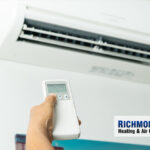
Are Residential Mini-Split A/C and Heat Pumps Systems Efficient and Eco-Friendly?
September 8, 2021 by Richmond’s Air

efficiency of mini-split heat pumps

In Texas, summers go hand-in-hand with air conditioning. With the relentless heat and humidity that Houston is known for, it can get quite expensive to keep the inside of your home cool and comfortable, especially for those who have started working from home or are spending more time indoors lately.

In the increasingly hot summers and crippling winter cold fronts, you might be looking for ways to make heating and cooling your home more affordable and energy-efficient. One option that many homeowners have been looking into recently is installing a ductless mini-split system.

What are ductless mini-split heat pumps?

Ductless mini-split heat pumps are a popular alternative or supplemental add-on to traditional central heating and cooling systems. Where residential central air systems require a complex network of ducts to condition your home, mini-splits instead provide heating and cooling through a single device. This means you don’t have to install ducts, which can be expensive—especially if your home doesn’t already have a centralized heating and cooling system.

Instead, ductless mini-splits have an indoor unit that connects to a unit outdoors through a refrigerant line. This hook-up only requires a 3-inch hole for the conduit, making it much easier and less expensive to install.

You can generally choose between a mini-split system that has singular cooling capabilities or one that has both heating and cooling capabilities. In the summer, the heat pump moves heat from your home to the outside, much like an air conditioner. Then, in the winter, the heat pump works in reverse by moving heat from the outside into your home.

Since ductwork isn’t required for mini-splits, they can be installed in any section of your home. This means that almost every room or indoor unit can have customized heating and cooling with individual thermostats.

Some mini-split systems have 1 outdoor compressor that can connect to up to 4 indoor units, which means that you can have 4 different heating and cooling zones in your home. This is one of the biggest differences between mini-splits and centralized heating and cooling systems.

Are ductless mini-splits efficient and eco-friendly?

The short answer is, yes!

In fact, heat pumps, in particular, are so efficient that a recent report published by Columbia University’s Center on Global Energy Policy suggested that heat pumps offer one of the best ways to cut carbon in homes and commercial buildings. (Commercial HVAC services are not currently offered by Richmond’s Air). Considering that commercial and residential buildings account for roughly 12 percent of greenhouse gas emissions in the U.S., according to the EPA, this represents a “win-win solution” for efficiency and cutting carbon emissions.

More specifically, mini-split heat pumps are more efficient, cost-effective and eco-friendly compared to centralized heating and cooling systems for these 5 reasons:

1. Different zones of cooling and heating

Because mini-splits allow you to section your home into different “zones,” each with its own unit that is temperature-adjustable, you can cool and heat different parts of your home at different times. Ultimately, this makes it so that you aren’t expending energy cooling on a part of your home that you aren’t using.

For example, if you are working in your home office, you don’t necessarily need to keep your guest bedroom cool, since you aren’t using that room. With a mini-split system, you can keep your home office cool without having to worry about wasting energy and money cooling other parts of your home.

2. Lack of ductwork

Since mini-splits don’t require ductwork, they are already more energy-efficient than centralized heating and cooling systems because they eliminate the possibility of energy loss through leaky ducts. In fact, Energy Star says that in a typical home with centralized cooling, 20 percent of the cooling is lost to leaky ductwork.

With a mini-split system, you can trust that all energy is going directly into the zone of your house that needs cooling or heating.

3. Transfers heat rather than generating it

Energy Star reports that you could cut your heating costs in half by using a mini-split system. Mini-splits transfer heat rather than generating it, so mini-split heat pumps use 60 percent less energy than a traditional heating system.

4. Sophisticated compressors

With a mini-split system, you could also cut cooling costs by 30 percent compared to traditional air conditioners. The compressors are more sophisticated and you can adjust the fan speed accordingly to your different zones to save energy.

5. One unit for both heating and cooling

If you decide to install a mini-split system with heating capabilities, you will be heating and cooling your home through just 1 unit. This means that your home will be energy-efficient all year long.

Thinking about installing a mini-split system or improving your home’s heating and cooling efficiency? Richmond’s Air is here to help! We offer expert advice and affordable Houston AC repair services to keep your current system running smoothly while helping you explore energy-efficient solutions. Contact us today for insight and support!

Filed Under: Energy Savings Tagged With: ductless mini-split

8 Free Ways to Lower Your Home’s Winter Heating Bill

February 27, 2019 by Richmond’s Air

Lower heating bill in Houston home

Keeping your home warm in the winter can be expensive. Luckily, however, there are some tricks you can employ that can help save you money while getting the max efficiency out of your furnace or heating system.

Below are eight FREE ways you can lower your monthly winter heating bills. While they may seem like insignificant changes, these easy eight steps can gradually help lower your winter heating bill. The best part of all is you don’t even have to spend money!

1. Lower your thermostat

Simply lowering your thermostat can save you upward of 3 percent per degree per 24-hour period. Luckily, even if you can’t commit to lowering the temperature for a whole day, you’ll save 1 percent for every 8 hours.

2. Wear socks

If you’re on the fence about lowering your thermostat, remember that you can always stay warm and cozy by putting on a pair of fuzzy socks or a sweater to keep yourself warm.

3. Insulate your windows

A good deal of residential heat loss happens through windows. You can help reduce this loss by opening the curtains and shades of windows that face south during daylight hours to capitalize on the sun’s warmth. Don’t forget to close your blinds and curtains once the sun sets for better insulation during a chilly night.

4. When not in use, keep your chimney flue shut

Keeping your chimney flue open is the same as keeping a window cracked. Keeping it closed when you’re not using it will help keep warm air in. While you’re at it, make sure your dryer vent is properly closed, too.

5. Keep your doors shut

When not occupied, shut the doors to the rooms in your home. Why keep them warm if they’re not in use? When a room is occupied, a closed door will help capitalize on heat.

6. Don’t let clutter block vents or radiators

This also includes rugs or furniture. Your home’s vents work to keep warm air circulating in your home. Blocking the vents prevents warm air from reaching you and it’s unsafe for these objects to be too close to heat sources.

7. Utilize your ceiling fans

Keeping a fan on low and setting it to circulate the air upward (clockwise) will force rising warmer air downward.

8. Clean your vents and radiators

The dust in your home can act as a natural insulator. This means that if your vents or radiators are covered in dust, it will restrict warm air flow.

If your heating bill remains unusually high despite these tips, we recommend giving Richmond’s Air a call to see how we can improve your system’s efficiency. We serve the entire Houston area.

Filed Under: Energy Savings Tagged With: energy efficiency, residential heating

What is BTU & What Does it Mean for Your AC/Furnace?
November 2, 2018 by Richmond’s Air

BTU’s affects on your AC unit


In your search for a new air conditioning unit or furnace, you may have run across the acronym BTU, and if you are outside the world of heating and cooling jargon, you’re probably unfamiliar with it.

What is BTU?

BTU stands for British Thermal Unit. British Thermal Units are units of measurement for energy, and these units are used to measure the amount of energy that it takes to raise the temperature of one pound of water by one degree Fahrenheit. In other industries, the joule is used to determine these numbers; however, BTUs are often used when dealing with furnaces and AC units.

Why does this matter?

The amount of BTUs in a particular heating or cooling unit will directly correlate with the cooling and heating capacity of that unit. Using BTU as a measuring stick can help you differentiate the capacities of similar units. Buying a unit with an appropriate BTU for your home can help you maximize the unit’s power to fit your needs.

How many BTUs is right for me?

The amount of BTUs that is right for your home will depend on the size of your home, your insulation quality, your ceiling height, and numerous other factors. A professional HVAC inspection is a great place to start when figuring out which unit size is right for you.

If you’d like to see how your HVAC systems measure up, Richmond’s Air can help. We service all of Houston’s surrounding areas for A/C and heat installation and maintenance.

Call us today to schedule an appointment.

Filed Under: Energy Savings Tagged With: air conditioning systems, energy efficiency

Where Does Heat Escape from Your Home?

January 2, 2017 by Richmond’s Air

If you feel like the winter air making its way into your home and you’re having trouble getting the right heating temperature at night, it may be time to better insulate and weatherize your home or cold garage.

Believe it or not, up to 35% of the heat in your home can escape through walls, windows, doors, and other cracks and gaps. So, just by making small improvements, you can achieve the best home temperature for comfort, make your heating system more efficient, and decrease your energy bills.

How long since your heating unit was last checked?
Don’t get stuck out in the cold!

At Richmond’s Air, we’ve been doing heating and furnace repairs right since 2002. Our work is 100% guaranteed by a 1-year parts and labor warranty on repairs.

Houston Heating & Repair Service

Main culprits of heat loss

Here are the main places that heat escapes from your home:

  • Windows and doors – Gaps around windows and door can be a major source of heat loss, accounting for up to 20% of heat leakage. The best way to reduce this is to caulk around all of your windows and make sure the weather stripping around all of your doors is in good condition.
  • Attic holes and doors – There are several small, necessary holes in your attic for vents, air ducts, and pipes to run through your house. Unfortunately, these holes can cause a fair amount of heat to escape. Caulking or foam insulation spray helps to seal up these holes and minimizes heat loss.

If your attic door is inside your home rather than your garage, a lot of heat can escape through there as well. If you have this set up, it’s important to keep the back of the door well insulated and even install weather stripping around the opening.

  • Fireplaces – Even though you can’t beat a warm fire on a cold night, fireplaces are a major source of heat loss. If your damper is not sealed correctly, it can cause up to 14% of heat to escape through your chimney.
  • Floors – This may be a less obvious place because you generally think of heat rising rather than escaping through your floor, but if your floors aren’t well insulated, a substantial amount of heat can leak through.
Houston, what temperature do you turn your heater on when sleeping?

Houston, what’s your nighttime temperature?

In Houston, where temperatures can fluctuate dramatically, the question of when to turn on the heater for a comfortable night’s sleep sparks diverse opinions.

Learn more

The Washington Post reports that “the average home – even when well-insulated – contains cracks and gaps between building materials that can add up to a hole about 14 inches square.”

So even if you feel like your home is sealed and secure, you may be losing more heat than you think.

At Richmond’s Air, we want to provide our customers in the Houston, Bellaire, Katy and Spring areas with the most efficient HVAC system possible. Talk to one of our certified HVAC technicians today to evaluate how we can help you reduce the amount of heat and air escaping your home.

Filed Under: Energy Savings Tagged With: furnaces, heat and air, heating systems, residential heating

  • 1
  • 2
  • 3
  • 4
  • Next Page »

Contact the Best Heating & Cooling Pros In the Houston Area

Request Service Now

It’s AC Maintenance Time in Houston!

Find out what problems you prevent when you keep up with preventative AC maintenance.

BBB Accredited

BBB Accredited Business

Categories

  • AC Repair
  • Community
  • Energy Savings
  • Indoor Air Quality
  • Indoor Comfort Systems
  • Industry News
  • Preventative Maintenance
  • Upgrading your System

Central Heating & A/C Are Meant to Keep You Comfortable Regardless of Current Weather Conditions

Heating Services – AC Services – Installation – Maintenance - Tune Up - Repair

Don't sweat or shiver – keep your A/C and furnace running at peak performance with regularly scheduled maintenance service. But if your system is starting to lose its cool and the repair bill seems high, HVAC specialists at Richmond's Air also provide exceptional A/C and furnace installation for homes in metro-Houston.

Don't delay – your family's comfort depends on a smooth functioning A/C and heating furnace. Schedule a maintenance or repair appointment by calling (713) 732-6426 between the hours of 7am-7pm Monday through Friday and 7am-5pm Saturday!

If you don't get an answer, don't sweat it! Just leave us a quick message with your name and phone number - an experienced central air conditioning/heating maintenance, repair and installation specialist will call you right back!!

Reliable Heating & Cooling Contractors
Central Heat & Air – Furnace Repair –
AC Repair

Get a FREE AC Tune-Up!

Get a FREE AC Tune-Up!

AC maintenance season in Houston is here! Richmond’s Air is proud to participate in CenterPoint® Energy Houston’s CoolSaver program to offer you a complimentary AC tune-up. This tune-up can save you money on future repairs as well as increase your system’s efficiency and cooling output by up to 27%.   Find out if you qualify


Facebook Twitter Blog Contact
Richmond's Air $$$ Air Conditioning Service and Maintenance
Richmond's Air: 5 Rollingwood Dr  Houston, TX 77080    (713) 999-4735
Hours: Monday to Friday: 7am – 7pm    Saturday: 7am – 5pm    Sunday: Closed

Houston HVAC Services From a Local Company You Can Trust. Serving Houston, TX and surrounding areas: Katy, Bellaire, Spring, Cypress.
Our neighboring ZIP codes: 77024, 77056, 77005, 77019, 77030


Find Us on Angie's List

Richmond's Air BBB Business Review TACCA Membership

Copyright © 2026 · Web Design & Marketing by SEO Advantage, Inc.