Richmonds Air Houston

License TACLA32064E

Professional AC and Heating Services

Houston's BEST Heating & AC Repair since 2002
5 star ratings Houston AC Repair company Read reviews

Request Service
(713) 732-6426
M-F 7am - 7pm | Sat 7am - 5pm
  • Home
  • About Us
  • Service Areas
    • Houston
    • Bellaire
    • Katy
    • View All
  • Services
    • Air Conditioning
      • AC Installation
      • Whole House Humidifier Installation
    • Heating
      • Heating Repair
  • Learn
  • Blog
  • Reviews
  • Contact Us
Mention these WEB COUPONS when contacting
us to get discount. One offer per customer.
scissors $25 off any repair $100 off new equipment FREE service call with repair
Houston HVAC (Home) / residential heating

A Winter Furnace Checklist for Houston Homeowners
October 28, 2025 by Richmond’s Air

A Winter Furnace Checklist for Houston Homeowners

Winter is coming, Houston. Is your furnace ready?

When the first Texas cold snap hits, the last thing you want is to discover that your heater isn’t working. So, before temperatures drop, take a few minutes to make sure your furnace is prepared for the season.

Below, you’ll find our DIY furnace maintenance checklist to help you catch small issues before they turn into major headaches. We’ll also alert you to top signs that it may be time to call in a trusted Houston HVAC technician.

DIY furnace checklist to get winter-ready

Before calling in the pros, there are a few simple steps you can take yourself to ensure your furnace runs smoothly and safely this winter. These quick maintenance tasks can help prevent costly repairs down the road and keep your home comfortable when temperatures drop.

#1: Replace your furnace filters

Dirty filters make your furnace work harder than it should, increasing wear and energy use. Check your filter every month and replace it when it looks dusty or gray. Clean filters help improve airflow, reduce strain on your system, and keep your indoor air healthier.


#2: Inspect your ductwork

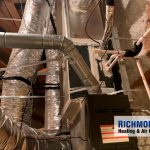
Your ducts carry warm air throughout your home—so any leaks or blockages mean wasted energy. For visible ductwork, look for loose joints or gaps and reseal them with foil-backed duct tape to improve efficiency.

#3: Check your vents for blockages

Walk through your home and make sure furniture, curtains, or rugs aren’t blocking any vents. Blocked vents can restrict airflow, cause uneven heating, and even pose a fire hazard if they trap heat. Keeping vents clear also helps your furnace distribute warm air more evenly.

#4: Clean your heat exchanger

Over time, soot, dust, and rust can build up on your heat exchanger and reduce heating efficiency. Turn off power to your furnace, remove the access panel, and gently vacuum the area around the exchanger. If you see signs of corrosion or cracks, call an HVAC professional immediately, as this could indicate a carbon monoxide risk.

#5: Test your programmable thermostat

Make sure your programmable thermostat is working properly by turning up the temperature until your furnace kicks on. If it doesn’t, try changing the batteries, checking the circuit breaker, or resetting the device. While you’re at it, update your heating schedule to match your winter routine for better comfort and energy savings.
 

#6: Check your fuel levels

If your furnace runs on propane or oil, don’t wait for cold weather to check your tank. Make sure fuel levels are topped off before winter begins. Running too low can also allow air into the lines, which may cause your furnace to shut down or require a professional to restart it.

#7: Check your pilot light (for gas furnaces)

If your furnace uses a standing pilot light, make sure it’s burning blue—not yellow or orange, which could indicate a ventilation or gas issue. If it keeps going out, don’t try to fix it yourself; contact a professional right away.

#8: Inspect your condensate drain line

If you have a high-efficiency furnace, check the condensate drain tube for clogs or leaks. A blocked line can cause water damage or shut down your system. You can flush it with a mix of warm water and vinegar to clear debris.

#9: Inspect the blower belt and motor

If your furnace is making squealing or rattling noises, it could be a loose or worn blower belt. Turn off the power, remove the access panel, and visually inspect the belt for cracks or fraying. Tighten or replace it if needed, or call a professional if you’re unsure.

#10: Clear debris around the furnace

Keep the area around your furnace free of boxes, cleaning supplies, and other clutter. Your furnace needs proper airflow to run efficiently, and nearby flammable materials can create a fire hazard. Aim for at least 2 to 3 feet of clear space on all sides.

Top Heating Mistakes Houston Homeowners Make in the Winter

Save money this winter by avoiding these 9 common heating mistakes.

Learn more


Top signs your furnace needs an HVAC technician

Even the most dedicated DIY homeowner reaches a point where it’s best to bring in a certified HVAC technician. If you notice any of these warning signs, it’s time to schedule professional service before a small issue becomes a costly repair:

  • Weak airflow or cold air from vents. If your furnace is running but your home still feels chilly, there could be a blockage in your blower, ducts, or indoor coils. A technician can safely locate and remove any obstructions and even clean your ductwork to ensure your system is delivering consistent heat throughout your home.
  • Strange noises or vibrations. Constant grinding, rattling, or squealing sounds often signal loose or worn parts inside the furnace. A pro can pinpoint the source, tighten components, or replace belts before the problem leads to major motor damage.
  • Burning or musty smells. If you smell something unusual—like burning dust, melted plastic, or mildew—turn off your furnace and call a technician. Electrical issues, blocked vents, or moisture buildup can create fire hazards or air-quality problems that require professional attention.
  • System is short-cycling or running constantly. If your furnace turns on and off frequently or seems to run nonstop, it may be struggling with poor airflow, a dirty sensor, or an electrical issue. A technician can recalibrate your system and make sure it’s heating efficiently.
  • Increased energy bills. A sudden spike in your utility bill without any change in usage is often a sign that your furnace is working harder than it should. An HVAC tech can perform an efficiency check and clean or replace worn parts to get things running smoothly again.
  • Mechanical or electrical issues. A technician can lubricate the motor and other moving parts to prevent friction, check all belts for proper tension, and clean electrical terminals. They can also apply protective coatings and inspect for loose or corroded wiring to reduce the risk of system failure or fire.
  • Gas or oil furnace maintenance. If you have a gas or oil-powered furnace, a professional inspection is essential. Your technician will test gas pressure, burner combustion, and heat exchanger integrity to ensure safe operation. Faulty gas connections or damaged components can cause leaks, fires, or carbon monoxide exposure.
  • Visible rust, leaks, or corrosion. Water pooling near your furnace or rust forming on components can indicate internal leaks or drainage issues. A certified HVAC technician can inspect and repair the condensate system before the damage spreads.

Remember, a professional inspection catches small problems early, improves efficiency, and helps extend the life of your system, so even if your furnace seems fine, annual tune-ups are crucial for long-term performance.

Need help getting your home furnace or HVAC system winter-ready in Houston?

The team at Richmond’s Air has been helping Texas homeowners stay comfortable for more than 20 years. As a local, veteran-owned HVAC company in Houston, we take pride in providing honest advice, reliable repairs, and top-quality service you can trust.

Whether you need help troubleshooting heating issues in your garage or home or you’re ready to upgrade to a new furnace, our certified HVAC technicians in Houston are here to keep your home warm and safe all winter long.

Contact Richmond’s Air to schedule an appointment for furnace or HVAC maintenance, repair, or replacement services today.

Should You Cover an Outdoor Air Conditioning Unit in the Winter?

Do I Need To Cover My AC in the Winter?

AC covers often create more problems than they solve. Our Houston HVAC experts explain the dangers and give smart tips to prep your AC for colder temps.

Learn more

Filed Under: Preventative Maintenance Tagged With: furnaces, residential heating

8 Free Ways to Lower Your Home’s Winter Heating Bill

February 27, 2019 by Richmond’s Air

Lower heating bill in Houston home

Keeping your home warm in the winter can be expensive. Luckily, however, there are some tricks you can employ that can help save you money while getting the max efficiency out of your furnace or heating system.

Below are eight FREE ways you can lower your monthly winter heating bills. While they may seem like insignificant changes, these easy eight steps can gradually help lower your winter heating bill. The best part of all is you don’t even have to spend money!

1. Lower your thermostat

Simply lowering your thermostat can save you upward of 3 percent per degree per 24-hour period. Luckily, even if you can’t commit to lowering the temperature for a whole day, you’ll save 1 percent for every 8 hours.

2. Wear socks

If you’re on the fence about lowering your thermostat, remember that you can always stay warm and cozy by putting on a pair of fuzzy socks or a sweater to keep yourself warm.

3. Insulate your windows

A good deal of residential heat loss happens through windows. You can help reduce this loss by opening the curtains and shades of windows that face south during daylight hours to capitalize on the sun’s warmth. Don’t forget to close your blinds and curtains once the sun sets for better insulation during a chilly night.

4. When not in use, keep your chimney flue shut

Keeping your chimney flue open is the same as keeping a window cracked. Keeping it closed when you’re not using it will help keep warm air in. While you’re at it, make sure your dryer vent is properly closed, too.

5. Keep your doors shut

When not occupied, shut the doors to the rooms in your home. Why keep them warm if they’re not in use? When a room is occupied, a closed door will help capitalize on heat.

6. Don’t let clutter block vents or radiators

This also includes rugs or furniture. Your home’s vents work to keep warm air circulating in your home. Blocking the vents prevents warm air from reaching you and it’s unsafe for these objects to be too close to heat sources.

7. Utilize your ceiling fans

Keeping a fan on low and setting it to circulate the air upward (clockwise) will force rising warmer air downward.

8. Clean your vents and radiators

The dust in your home can act as a natural insulator. This means that if your vents or radiators are covered in dust, it will restrict warm air flow.

If your heating bill remains unusually high despite these tips, we recommend giving Richmond’s Air a call to see how we can improve your system’s efficiency. We serve the entire Houston area.

Filed Under: Energy Savings Tagged With: energy efficiency, residential heating

What’s That Sound? Why Your Heater is Making a Racket
April 18, 2017 by Richmond’s Air

Hearing a loud or unusual noise coming from your heater is worrisome to say the least.

These noises can be caused by a variety of problems. Some issues you may be able to resolve yourself, while others may require a licensed Houston HVAC repair expert.

Whistling

A whistling furnace could be the result of issues with your ducts. Your furnace may need more airflow than your ducts can provide, in which case the answer may be installing larger ducts.

Before you do that, make sure there aren’t any gaps in your ductwork. Gaps in the ducts, especially at the point where the duct joins the furnace, can also cause the furnace to whistle. If the whistling is a recent development, it may even be due to a clogged filter. You can test this theory by removing the filter to see if the whistling stops.

Rattling

This could be caused by loose ducts. You can try reinforcing the ducts with additional screws or duct tape. Adding cork or rubber pads underneath the furnace may also help alleviate the problem. Simply use a pry bar to lift the unit, allowing you to slide the pad underneath.

How long since your heating unit was last checked?
Don’t get stuck out in the cold!

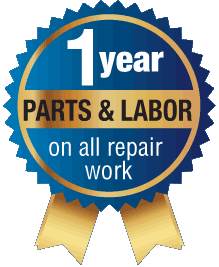
At Richmond’s Air, we’ve been doing heating and furnace repairs right since 2002. Our work is 100% guaranteed by a 1-year parts and labor warranty on repairs.

Houston Heating & Repair Service

Bouncing

A bouncing noise coming from the motor may indicate that the bearings are worn and need to be replaced. Your best solution for this problem is to call an HVAC professional.

Banging

A banging sound as your furnace turns on can be caused by a couple of different problems. If the sound appears to be coming from the ducts, they may simply be flexing in response to the change in pressure as the furnace turns on. Screwing an additional piece of metal into any weak spots in your ducts can solve this issue.

Banging may also indicate a gas-ignition problem that causes a small explosion as the furnace ignites. This is most likely the problem if you notice a change in the flame or if the furnace doors shake as the furnace starts up. This issue should also be addressed by a trained HVAC technician.

Squeaking

A squeaking sound as you walk near the furnace typically indicates that the ducts or metal panning may not have been secured properly. The solution usually involves reinforcing, rehanging or replacing the ducts and panning.

If you have any doubts about what is causing your furnace to make noise or if you aren’t versed in mechanical repairs, it’s best to err on the side of caution and contact a specialist. Houston HVAC technicians at Richmond’s Air stand ready to come to your aid at a moment’s notice. Contact us today for professional service.

Filed Under: Preventative Maintenance Tagged With: heat and air, heating systems, residential heating

Turning On Your Furnace: Where to Start
February 6, 2017 by Richmond’s Air

Your furnace has been sitting idle for several months, but now it’s frigid out and you’re ready to flip on the heat. You cross your fingers and wonder, “Will it work?”

It’s a good idea to take some simple steps before booting up your residential heater to make sure it doesn’t leave you stuck in the cold.

How long since your heating unit was last checked?
Don’t get stuck out in the cold!

At Richmond’s Air, we’ve been doing heating and furnace repairs right since 2002. Our work is 100% guaranteed by a 1-year parts and labor warranty on repairs.

Houston Heating & Repair Service

Here are six DIY maintenance checks to perform on your HVAC system this winter:

  1. Inspect the system. Walk around your home and attic, checking for:
    • Loose connections in your ductwork
    • Signs of residue build-up on your furnace
    • Problems with your chimney vent
    • Cracks or heavy wear on your blower belt
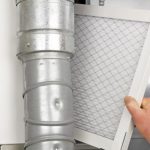
  2. Change air filters. Air filters should be changed out at least every 3 months, but it’s a good idea to put new ones in before you start up your furnace.
  3. Check registers and vents. Inspect all of your air registers and return vents to make sure there is no debris or other blockage obstructing air flow.
  4. Clean air ducts. Dust and debris can quickly build up in your ductwork, which can dramatically affect air flow throughout your house. Your air ducts should be cleaned regularly to avoid this and any contaminants from getting into your air. This particular task can be tricky, so don’t be afraid to call an expert for help.
  5. Vacuum accessible areas. Take the hose and brush on your vacuum and use it to gently clean any areas of your furnace that are easy to access. This will help eliminate some particles and contaminants from getting into your furnace and the circulating air.
  6. Consider purchasing a carbon monoxide detector. Carbon monoxide (CO) is not detectable with any of your senses, so the only way you can tell if the toxic gas is present in your home is to install a CO detector. Adding this feature will help ensure your home and family stays safe this winter.

When you turn on your furnace, don’t be surprised if there’s a burning smell for the first few minutes. This is common as your system may need to burn off some dust that’s collected over the summer, but the smell should stop pretty quickly.

If it doesn’t, it’s time to call an HVAC technician!

Taking the time to perform these small preventative measures each year can keep you from paying for costly repairs later. It’s also a good idea to have a tune-up on your HVAC system at the start of every winter so that an expert can look for any possible problems.

Further reading: What To Do If Your Home Heater Doesn’t Turn On

Filed Under: Indoor Comfort Systems Tagged With: air filters, DIY maintenance, heating systems, residential heating

Where Does Heat Escape from Your Home?

January 2, 2017 by Richmond’s Air

If you feel like the winter air making its way into your home and you’re having trouble getting the right heating temperature at night, it may be time to better insulate and weatherize your home or cold garage.

Believe it or not, up to 35% of the heat in your home can escape through walls, windows, doors, and other cracks and gaps. So, just by making small improvements, you can achieve the best home temperature for comfort, make your heating system more efficient, and decrease your energy bills.

How long since your heating unit was last checked?
Don’t get stuck out in the cold!

At Richmond’s Air, we’ve been doing heating and furnace repairs right since 2002. Our work is 100% guaranteed by a 1-year parts and labor warranty on repairs.

Houston Heating & Repair Service

Main culprits of heat loss

Here are the main places that heat escapes from your home:

  • Windows and doors – Gaps around windows and door can be a major source of heat loss, accounting for up to 20% of heat leakage. The best way to reduce this is to caulk around all of your windows and make sure the weather stripping around all of your doors is in good condition.
  • Attic holes and doors – There are several small, necessary holes in your attic for vents, air ducts, and pipes to run through your house. Unfortunately, these holes can cause a fair amount of heat to escape. Caulking or foam insulation spray helps to seal up these holes and minimizes heat loss.

If your attic door is inside your home rather than your garage, a lot of heat can escape through there as well. If you have this set up, it’s important to keep the back of the door well insulated and even install weather stripping around the opening.

  • Fireplaces – Even though you can’t beat a warm fire on a cold night, fireplaces are a major source of heat loss. If your damper is not sealed correctly, it can cause up to 14% of heat to escape through your chimney.
  • Floors – This may be a less obvious place because you generally think of heat rising rather than escaping through your floor, but if your floors aren’t well insulated, a substantial amount of heat can leak through.
Houston, what temperature do you turn your heater on when sleeping?

Houston, what’s your nighttime temperature?

In Houston, where temperatures can fluctuate dramatically, the question of when to turn on the heater for a comfortable night’s sleep sparks diverse opinions.

Learn more

The Washington Post reports that “the average home – even when well-insulated – contains cracks and gaps between building materials that can add up to a hole about 14 inches square.”

So even if you feel like your home is sealed and secure, you may be losing more heat than you think.

At Richmond’s Air, we want to provide our customers in the Houston, Bellaire, Katy and Spring areas with the most efficient HVAC system possible. Talk to one of our certified HVAC technicians today to evaluate how we can help you reduce the amount of heat and air escaping your home.

Filed Under: Energy Savings Tagged With: furnaces, heat and air, heating systems, residential heating

  • 1
  • 2
  • 3
  • …
  • 5
  • Next Page »

Contact the Best Heating & Cooling Pros In the Houston Area

Request Service Now

It’s AC Maintenance Time in Houston!

Find out what problems you prevent when you keep up with preventative AC maintenance.

BBB Accredited

BBB Accredited Business

Categories

  • AC Repair
  • Community
  • Energy Savings
  • Indoor Air Quality
  • Indoor Comfort Systems
  • Industry News
  • Preventative Maintenance
  • Upgrading your System

Central Heating & A/C Are Meant to Keep You Comfortable Regardless of Current Weather Conditions

Heating Services – AC Services – Installation – Maintenance - Tune Up - Repair

Don't sweat or shiver – keep your A/C and furnace running at peak performance with regularly scheduled maintenance service. But if your system is starting to lose its cool and the repair bill seems high, HVAC specialists at Richmond's Air also provide exceptional A/C and furnace installation for homes in metro-Houston.

Don't delay – your family's comfort depends on a smooth functioning A/C and heating furnace. Schedule a maintenance or repair appointment by calling (713) 732-6426 between the hours of 7am-7pm Monday through Friday and 7am-5pm Saturday!

If you don't get an answer, don't sweat it! Just leave us a quick message with your name and phone number - an experienced central air conditioning/heating maintenance, repair and installation specialist will call you right back!!

Reliable Heating & Cooling Contractors
Central Heat & Air – Furnace Repair –
AC Repair

Facebook Twitter Blog Contact
Richmond's Air $$$ Air Conditioning Service and Maintenance
Richmond's Air:
5 Rollingwood Dr  Houston, TX 77080   
(713) 999-4735
Hours: Monday to Friday: 7am – 7pm    Saturday: 7am – 5pm    Sunday: Closed

Houston HVAC Services From a Local Company You Can Trust. Serving Houston, TX and surrounding areas: Katy, Bellaire, Spring, Cypress.
Our neighboring ZIP codes: 77024, 77056, 77005, 77019, 77030


Find Us on Angie's List

Richmond's Air BBB Business Review TACCA Membership

Copyright © 2026 · Web Design & Marketing by SEO Advantage, Inc.